
How often do you skip breakfast or grab a coffee and pastry on-the-go to stop the hunger pangs mid-morning? Once a week? Twice? Everyday?
‘Breakfast’ literally means to ‘break the fast’ that occurs overnight. After approximately 12 hours without fuel, it’s easy to see why it’s called the most important meal of the day – providing the energy your body needs to get you going in the morning. A balanced breakfast on a regular basis means:
• A more balanced overall diet
• An increased vitamins and minerals intake
• More likely of meeting the 5 a day requirement
What your body needs
- Vitamins and minerals
- Healthy Fats
- Fibre
- Phytonutrients
- Protein
- Carbohydrates
- Hydration
- Collagen
- Fruits and Vegetables
1 Vitamins and minerals

Why do we need them?
While they may sound small and unimportant, micronutrients are the vitamins and minerals that are essential and vital to your health. Vitamins and minerals are called micronutrients because they are needed in much smaller amounts than the macronutrients – protein, carbohydrate, and fat. But even though they are only needed in small amounts, it’s vitally important that you consume them every day because, with very few exceptions among the vitamins, micronutrients cannot be made by the body. Considering their importance
in supporting normal function, growth, and maintenance of the body, it’s easy to see why it is vitally important to meet micronutrient needs every day.
What do they do?
In general, the main function of vitamins is to enable hundreds of chemical reactions in the body to occur – such as normal energy yielding metabolism or blood clotting, for example – although different vitamins and minerals have different functions in the body. With today’s hectic lifestyle sometimes we struggle to get a balanced diet which provides us with all the vitamins and minerals we need. Vitamin and mineral supplements or fortified food can help you get the recommended amounts of micronutrients on a daily basis.
2. Healthy fats

What are fats?
The nutrition story around fats used to be pretty simple: saturated fats were the bad fats, and polyunsaturated fats were the good fats. But the story is a bit more complicated. Now we’re talking about getting the right balance of fats. Two kinds of polyunsaturated fats in particular: omega-3 and omega-6. First, a little terminology. The terms omega-3 and omega-6 refer to the chemical structure of the fatty acid, and there are several omega-3 and omega-6 fatty acids that we eat, not just one. Within each group there are ‘essential’ fatty acids – the ones we need to eat, because our bodies can’t make them. In small amounts and in the right balance, essential fatty acids serve to support vision and brain function.
Am I getting enough?
The problem is that our food supply is overloaded with the omega-6 fats, and we don’t get enough omega-3. When this balance is off, our health may suffer. We’re overloaded with
omega-6, which is in everything from fried foods, baked goods, chips, salad dressings and sweets. At the same time, we’re not eating nearly enough omega-3s – particularly from fish – but also from foods like vegetables and nuts, too. To be sure you get the good fats, try to eat more fish if you can or you can consider a fish oil supplement. Veggies and fruits naturally have the right balance of fatty acids, so do your best to include some at every meal.
3. Fibre

What is Fibre?
The average person falls short of meeting the fibre recommendation of 25-30 grams a day. In fact, most of us only eat about 10 grams a day, which means we may be missing out on the health benefits of dietary fibre. Fibre helps move the digestive process along, but high fibre
foods also provide the sensation of fullness, so they help with hunger control. If you make sure to include sufficient amounts of good fibre in your breakfast, chances are you’ll be less tempted to reach for a sweet treat. If you mix fibre with protein, the sensation of satiety might even take you all the way through to your lunch. Certain fibres support the growth of friendly bacteria in your digestive tract. Thinkof your gut as an ecosystem.
Am I getting enough?
There are two types of fibres: soluble and insoluble. Soluble fibres dissolve in water and they thicken up, helping to keep you full. The insoluble fibres absorb water in the lower tract and become more bulky, they speed the passage of waste through your digestive system. Feeling bloated can really ruin your mood so make sure you keep fibre intake in check. You also need to consider that adding too much fibre to your diet in a short period of time might lead to
abdominal discomfort and gas, so take it slowly to allow your system time to adjust.
4. Phytonutrients

What are Phytonutrients?
The pigments that give fruit and vegetables (as well as herbs, spices and even some whole grains) their beautiful colours are naturally occurring plant compounds known as phytonutrients. They each play a different role, such as helping to defend against bacteria and bugs. Many phytonutrients also act as antioxidants that help to protect against cell and tissue damage caused by normal, everyday metabolism
Am I getting enough?
Eating a balanced diet with at least 5 servings of colourful fruits and vegetables per day can help to ensure you get all the necessary nutrients, and can reap the benefits of the phytonutrients in your food. When fruits such as red apples, blueberries, grapes and oranges are eaten together, they provide a richer mix of nutrients with antioxidant effects than when
eaten individually*. So mix up your salads, fruit salads and stir-fries. Remember the phrase ‘eat a rainbow’. Fruit and vegetables have their own unique pigments and phytonutrient
profiles; but their level of nutrients with antioxidant properties varies too, which is why it’s a good idea to eat an abundance of different types and colours.
5. Protein

What is Protein?
Protein is one of the major nutrients in our food. It provides energy to the body and it helps to build muscles and bones* . It seems everywhere we look someone is promoting a new diet that praises the power of protein. But whether you want to lose weight, bulk up, or just eat a nutritious diet, the importance of protein goes far beyond physical appearance and muscle building. If you want to maintain or build up muscle, you need to provide your body with enough protein according to your needs to make sure the necessary amino acids come from your diet and not your muscle.
Am I getting enough?
Getting the right amount of protein in your diet is needed for several reasons – one of them being its ability to contribute to maintain normal bones. The second benefit is that protein, when coupled with resistance exercise, can help you build muscle mass that, in turn raises your metabolism even while resting. If you exercise regularly, your body will need more protein. Women and men should be eating up to 30% of their total daily kilojoule intake from proteins depending on your age, gender and lifestyle. You need to eat enough protein throughout the whole day making sure you divide it among each of your meals.
6. Carbohydrates
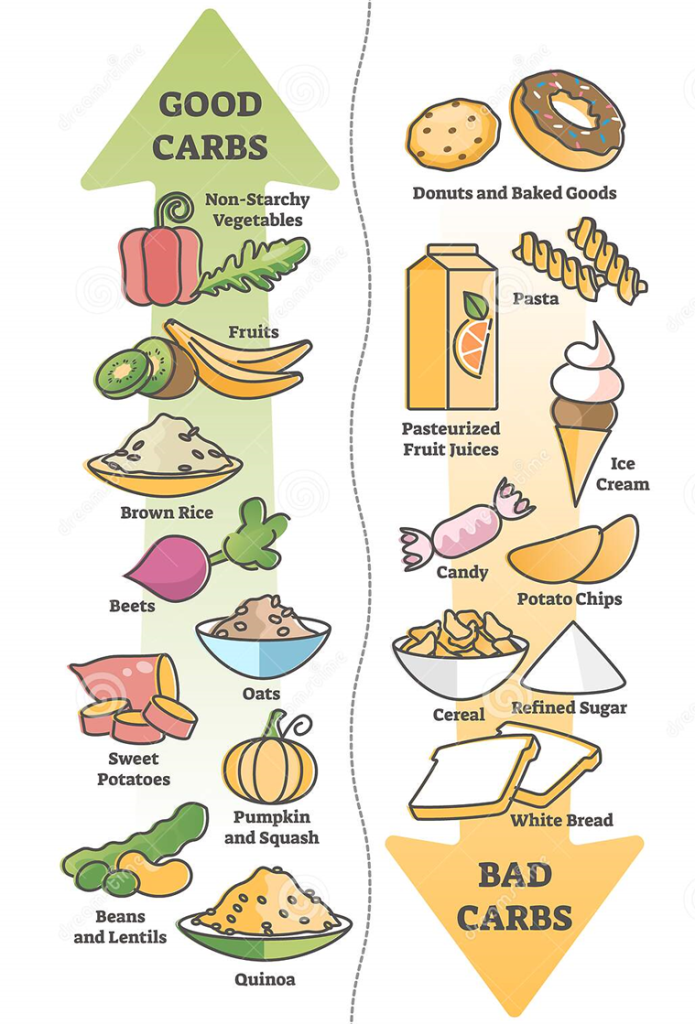
What are carbohydrates?
As much as people talk about carbohydrates, you’d think that everyone actually knows where we get our carbs from and how much carbohydrate we should be eating every day – or not. In truth, carbohydrates have been both praised and punished – in part because they’re largely misunderstood. When you say the word carbs, you probably picture starchy foods like noodles, bread, rice and potatoes. And you’d be right. But you’d be just as right if fruits or vegetables popped into your head. And you’d still be right if you thought of sugar or honey or jam – or even a glass of milk. That’s because lots of foods supply carbohydrates, and it’s a good thing, too. When it comes to keeping your engine running, your body’s first choice of fuel isn’t fat or protein – it’s carbohydrates.
Am I getting enough?
You sometimes hear people refer to different carbs as being ‘good’ or ‘bad.’ What they’re trying to say is that the good carbohydrate sources are those that are the least processed – foods like whole fruits, vegetables, dairy products, beans and whole grains. The other reason these products are good is that they provide more than just energy to the body. There are also vitamins and minerals tagging along. And in the case of fruits, vegetables, beans and grains, we also pick up some fibre and antioxidants.
7. Hydration

Water is essential to the entire body; after all, our bodies are made up of approximately 60% water. Keeping the body hydrated both internally and externally is something that we all need to do to look and feel good. So, what can we do? Be sure to keep your body hydrated by drinking plenty of water using these 5 tips.
- See it
It can be really helpful if you can actually see the amount of water you plan to drink, and track your progress over the course of the day. Put the amount of water you plan to drink in a bottle and take it everywhere with you. It will serve as a reminder to drink more, and you’ll be motivated to sip on it as the day goes by. - Cool it
Cold water often seems more refreshing than room temperature water. Try stashing a bottle of water in your freezer, and carry it with you during the day. It will stay cold for several hours, and you might be encouraged to drink more. - Wake up to it
“Morning mouth” is a reminder that most of us are naturally a bit dehydrated in the morning. So, keep a glass of water by your bed, and drink it first thing before your feet even hit the floor. - Flavour it
Make your own spa water. Try adding Herbal Aloe Concentrate Drink or a slice of fresh lemon or lime, some cucumber, a few berries, some fresh mint or a slice of fresh ginger to your water. It makes it feel special and adds a hint of refreshing flavour. - Dine it
Treat water like an appetiser and start your meals with a glass of water. Not
only will you work more water into your day, it might curb your appetite a
bit, too.
8. Collagen

“Look younger for longer” – Collagen cannot delay the aging process, but it can feed your skin and body in such a way that it delays your skin’s ageing process.
Collagen is the most plentiful protein in your body, accounting for about one-third of its protein composition.
It’s one of the major building blocks of bones, skin, muscles, tendons, and ligaments. Collagen is also found in many other body parts, including blood vessels, corneas, and teeth.
You can think of it as the “glue” that holds all these things together. In fact, the word comes from the Greek word “kólla,” which means glue.
It has various important roles, including providing structure to your skin and helping your blood clot.
What does it do in your body?
There are at least 16 types of collagen. The four main types are type I, II, III, and IV
Here’s a closer look at the four main types of collagen and their roles in your body:
- Type I. This type accounts for 90% of your body’s collagen and is made of densely packed fibers. It provides structure to skin, bones, tendons, fibrous cartilage, connective tissue, and teeth.
- Type II. This type is made of more loosely packed fibers and found in elastic cartilage, which cushions your joints.
- Type III. This type supports the structure of muscles, organs, and arteries.
- Type IV. This type helps with filtration and is found in the layers of your skin.
As you age, your body produces less and lower quality collagen.
One of the visible signs of this is in your skin, which becomes less firm and supple. Cartilage also weakens with age.
Nutrients that increase collagen production
All collagen starts off as procollagen. Your body makes procollagen by combining two amino acids — glycine and proline. This process uses vitamin C. You may be able to help your body produce this important protein by making sure you get plenty of the following nutrients:
- Vitamin C. Large amounts are found in citrus fruits, bell peppers, and strawberries
- Proline. Large amounts are found in egg whites, wheat germ, dairy products, cabbage, asparagus, and mushrooms
- Glycine. Large amounts are found in pork skin, chicken skin, and gelatin, but glycine is also found in various protein-containing foods. a great source is found in marrow broth (Marrow bones or chicken bones boiled for at least 4 or more hours to release the collagen it contains, and you are left with a jelly that can be used in your foods – when heated it becomes thin again)
- Copper. Large amounts are found in organ meats, sesame seeds, cocoa powder, cashews, and lentils
In addition, your body needs high quality protein that contains the amino acids needed to make new proteins. Meat, poultry, seafood, dairy, legumes, and tofu are all excellent sources of amino acids.
Things that damage collagen
Perhaps it’s even more important to avoid the following collagen-destroying behaviors:
- Eating too much sugar and refined carbs. Sugar interferes with collagen’s ability to repair itself. Minimize your consumption of added sugar and refined carbs
- Getting too much sunshine. Ultraviolet radiation can reduce collagen production. Avoid excessive sun exposure
- Smoking. Smoking reduces collagen production. This can impair wound healing and lead to wrinkles
- Some autoimmune disorders, such as lupus, can also damage collagen.
Natural food sources
Collagen is found in the connective tissues of animal foods. For example, it’s found in large amounts in chicken and pork skin. One particularly rich source is bone broth, which is made by boiling the bones of chicken and other animals. Gelatin is basically cooked collagen, so it’s very high in the amino acids needed to produce it. However, there’s debate over whether consuming collagen-rich foods actually increases the levels of this protein in your body. When you eat protein, it’s broken down into amino acids and then reassembled, so the collagen you eat wouldn’t translate directly into higher levels in your body.
Benefits of collagen supplements
Two types of supplements are gaining popularity — hydrolyzed collagen (collagen hydrolysate) and gelatin. Gelatin is created when collagen is cooked.
These have already broken the large protein down into smaller peptides, which are more easily absorbed in the body.
There aren’t many studies on collagen supplements, but those that exist show promise for benefits in the following areas:
- Muscle mass. A 2019 study in recreationally active men showed that a combination of collagen peptide supplements and strength training increased muscle mass and strength more than a placebo
- Arthritis. A 2017 animal study looked at the effects of giving collagen supplements to mice with post-traumatic osteoarthritis (PTOA). The results indicated that supplementation may play a protective role in the disease’s development and progression
- Skin elasticity. Women who took a supplement showed improvements in skin appearance and elasticity in a 2019 study. Collagen is also used in topical treatments to improve the appearance of skin by minimizing lines and wrinkles
Some alternative medicine practitioners also advocate using collagen supplements to treat leaky gut syndrome.
The bottom line
Collagen is an important protein that provides structure for many parts of the body.
Interestingly, the foods and nutrients you eat can help your body make this protein.
Alternatively, collagen supplements may be beneficial. Some preliminary studies show that they may improve skin quality, muscle function, and reduce the pain associated with osteoarthritis.
9. Fruits and Vegetables – and the Best and Worst of every food group
The best and worst choices in every food group, according to registered dietitians.
If you’re eating a mix of fruits, vegetables, whole grains, and lean proteins, then you’re probably pretty far ahead of the nutrition curve. But even if you’re hitting your five-a-day, steering clear of the junk food aisle, and are at a healthy weight, there’s still a chance you’re making mistakes with your food choices without even realizing it.
Not all foods are created equal—even the healthy ones—and you might not be getting as many vitamins and nutrients as you believe. In fact, you may inadvertently be loading your body with excess sugar and sodium.
We asked top nutrition experts to identify the best and worst foods in every category—veggies, fruits, legumes, grains, proteins, dairy, and fats—so you can close the gaps on your nutritional needs.
Best Veggie: Dark, Leafy Greens

Dark green veggies, such as spinach, Swiss chard, kale, and broccoli are one of the best sources of vitamin E. Vitamin E is a potent antioxidant and may be key in protecting the body against pro-inflammatory molecules called cytokines, according to a 2020 study published in Molecular Nutrition & Food Research.
Dark green veggies are also high in nutrients like calcium, iron, and disease-fighting flavonoids.
Worst Veggie: Anything in a Can
Canned veggies are often stripped of fiber and other nutrients, and are often loaded with sodium. If canned veggies are your go-to, you’ll experience decreased nutritional quality or, worse, unknowingly consume them with sugar, additives, sodium, or flavorings that detract from good nutrition and make it harmful.
If you need the convenience of canned vegetables, opt for frozen instead. They’re just as healthy as fresh because they’re flash-frozen at the site of harvest.
“They have no added sodium and are less wasteful, since you can cook only what you need and keep the rest in the freezer,” said Rachel Brandeis, RDN.
Plus, now frozen vegetables come in microwavable bags, which makes them very convenient for busy families trying to get veggies on the dinner table. (Just be sure you’re buying plain vegetables, and not ones coated in any type of sauce.)
However, keep in mind that canned vegetables are a better choice than not eating any vegetables at all. If fresh or frozen veggies aren’t an option, look for canned vegetables with no added salt or sugar.
Best Veggie: Kale, Cauliflower, Brussels Sprouts, and Other Cruciferous Vegetables
Kale isn’t the only nutritional superstar in the cruciferous vegetable category. Don’t forget to also include cabbage, broccoli, Brussels sprouts, cauliflower and other cruciferous vegetables in your diet, as well.
“Besides adding flavor to your meal, these veggies are packed with antioxidants and have been shown in multiple studies to help reduce cancer risk thanks to the phytochemical sulforaphane,” said Erin Palinski-Wade, RD, author of Belly Fat for Dummies.
“Aim to consume a minimum of 1 cup per day,” said Palinski-Wade. “If you’re not a fan of their texture, try pureeing cauliflower into a rice, which you can also make into a pizza crust!” (Here’s a recipe for cauliflower pizza crust.)
Worst Veggie: Starchy Vegetables
Corn, peas, potatoes, pumpkin, squash, and yams are all considered starchy vegetables. However, not all starch vegetables offer the same nutritional benefits. For instance, yams and pumpkins are excellent sources of fiber and beta-carotene. While potatoes are high in potassium.
Overall, starchy vegetables are high in antioxidants, vitamins, and minerals and should be included in a healthy diet. However, they should make up about one-quarter of a healthy plate since they are sources of carbohydrates.
One recent study from Harvard University found that eating leafy greens and cruciferous veggies resulted in significantly more weight loss than potatoes, peas, and corn. “These types of vegetables are best eaten earlier in the day as they’re higher in carbohydrates,” says Roger Adams, PhD, a Houston-based nutritionist.
Best Legume: Simply Cooked Beans
Chickpeas, black beans, and pinto beans provide an excellent meatless backbone for a healthful meal when combined with whole grains and vegetables. “These are especially good because they are whole-plant foods and are very rich in fiber and plant protein,” said Palmer. “Plus, consuming cooked beans has been linked with reducing your risk of chronic diseases and obesity.”
You can cook them yourself or drain and rinse them from a can and add them to salads, soups, casseroles, or curry dishes such as Indian dal. Unlike canned vegetables, canned beans can be a healthy addition to your pantry—they’re nutritionally equal, and as long as you rinse them before eating, you won’t take in any extra sodium.
Worst Legume: Canned Baked Beans
Unlike canned vegetables, canned beans can be a healthy addition to your pantry—they’re nutritionally equal, and as long as you rinse them before eating, you can greatly reduce the sodium content. (The leading brand of baked beans contains 3 teaspoons of sugar per serving, and 50% more sodium, said Nicole Rodriguez, RDN, registered dietitian nutritionist).
You should also be wary of canned bean soups. “Any kind of bean soup is full of fiber and protein, but you if you’re choosing a canned black bean soup or lentil soup, be sure you check to the label,” said Brandeis.
“Many of these canned soups are loaded with sodium, well over 900 milligrams per serving.” Look for low-sodium versions with less than 500 mg per serving.
Best Fruit: Avocado

Nutritionists like to call the avocado a powerhouse superfood. Technically fruits, avocados deliver on healthy fats—and are packed with anti-aging, disease-fighting antioxidants and nearly 20 different vitamins and minerals.
According to the US Department of Agriculture: One whole Hass avocado—without the skin and seed—supplies over 30% of the daily fiber target; 30% of the daily value for folate, a B vitamin needed to make new healthy cells; 36% for vitamin K, necessary for blood clotting and bone health; 20% for immune and skin supporting vitamin C; 13% for vitamin E, an antioxidant that also supports immune function; 20% for potassium, needed for heart, muscle, and nerve function and blood pressure regulation; and 10% for magnesium, a mineral required for over 300 reactions in the body, including heartbeat, bone health, blood sugar regulation, and nerve and muscle function.
Worst Fruit: Processed Fruit Drinks

Often marketed as “real juice,” the labels on these products prove otherwise. They’re loaded with sugar, empty calories, and artificial sweeteners.
Some companies try to get around the sugar in fruit beverages by adding artificial sweeteners that reduce the amount of sugar on the label. But, according to Harvard Medical School, the use of artificial sweeteners can make you pass over healthy, filling, and highly nutritious foods while consuming more artificially flavored foods with less nutritional value.
And it’s not just bottled juices you should avoid. Juicing a whole fruit concentrates its sugars and often eliminates the fiber.
Best Fruit: Berries
Berries contain antioxidants and phytonutrients that help power your heart, keep your mind sharp and kick start digestion.
Berries contain polyphenol compounds, which are known to have anti-inflammatory effects in human beings, according to a 2014 study published in the Journal of Agricultural and Food Chemistry.
Worst Fruit: Canned or Dried Fruit
Fruit is naturally sweet, so it shouldn’t need any added sugar or “sugar-based flavor enhancers” often found in the canned kind. That can include heavy syrups, nectar, or honey. The added sugar only adds excess calories that are totally unnecessary. Dried fruit can also contain added sugar.
“While they can add fiber and texture to trail mix, yogurt, oats, and home-made energy bars, they pack a serious caloric punch,” said Rodriguez.
Think about it: a raisin is just a shriveled-up grape, so a cup of raisins is going to contain a lot more calories than a cup of whole grapes. “Mind portion sizes by checking the nutrition facts for sugar content and consume in moderation,” said Rodriguez.
Best Fruit: Frozen Fruit
Frozen fruits are some of the healthiest foods in the freezer section. Because most frozen fruits are frozen shortly after they’re harvested, they’re allowed to fully ripen.
This means they’re chock full of vitamins, minerals, and antioxidants, locking in many of their nutrients, according to the Academy of Nutrition and Dietetics.
Best Grain: Whole Grains
Whole grains deliver on fiber, healthy plant-based protein, vitamins, minerals, and a variety of phytochemicals. Adults need about 25 to 35 grams of fiber daily, and whole grains contain two types—soluble and insoluble—which are both beneficial to your health.
You’ll get 5.8 grams of fiber in two slices of dark rye bread, but only 1.9 grams from the same amount of white bread.
If your mornings are hectic, overnight oats are a nutritious and tasty meal that can be ready the moment you wake up. Think about arranging ingredients or making an entire week’s worth of breakfasts.
Worst Grain: White Bread and Pasta
In refined grains—which include white bread, pasta, rice, crackers, and pretzels—the bran and germ are stripped away. “This type of grain has a higher glycemic index, meaning the sugars can be absorbed into the bloodstream faster, often causing a spike in blood sugar levels,” said Palmer. This may lead to rapid digestion over consuming calories.
“A good way to check whether something is whole or refined grain would be to make sure the first word on the bread or cereal label says ‘whole,’ which means whole grain-based bread,” said Brandeis. “If the first ingredient is ‘wheat,’ that’s a refined grain and offers less nutrition.” Aim for 48 grams of whole grains per day, suggests Brandeis.
Best Grain: Ancient Grains
Ancient grains are called “ancient” because they haven’t changed much in the last several hundred years, unlike modern types of wheat (which have been crossbred).
Many ancient grains are nutritional powerhouses rich in protein (quinoa has the most), calcium (teff has more than any other grain), fiber, and an amino acid called lysine, which helps your body burn fat.
Rodriguez loves farro: “With a pleasing, chewy texture and slightly nutty flavor, it’s an excellent source of fiber and iron and contains 7 grams of protein per serving,” said Rodriguez. “Mix feta, fresh parsley, and a bit of fresh lemon juice into hot farro for a tasty accompaniment to chicken or salmon.”
Worst Grain: Sugary Cereals
You can’t eat just one—serving, that is. A serving of cereal is just half a cup, and a big bowl may rack up as much sugar as a candy bar.
“A good way to judge whether a cereal is too high in sugar is to avoid brands with more than 12 grams per serving,” said Brandeis. Those are usually the ones that are at eye level in the cereal aisle and are strategically positioned so little ones can easily see them.
“If you really enjoy the high sugar-based cereals, try filling your bowl with half high-sugar cereal and half low-sugar cereal to dilute the amount of added sugar,” said Brandeis.
Best Grain: Oatmeal
Oats are rich in folate, fiber, potassium, and, if fortified with omega-3s, a good source of omega-3 fatty acids.
This makes them a heart-healthy food that lowers cholesterol and burns fat. Avoid packaged packets, which can be swimming in added sugar. Instead, use plain old-fashioned oats, and sweeten them with fruit and honey.
Best Protein: Fish
Fish supply us with omega-3s, fatty fish (like salmon, mackerel, tuna, herring, and sardines) are a prime heart-healthy food.
Omega-3s help reduce inflammation in the body. According to the Harvard School of Public Health, omega-3s have been shown to help prevent heart disease and stroke, may help control lupus, eczema, and rheumatoid arthritis, and may play protective roles in cancer and other conditions.
Fish also contain antioxidants. American Heart Association recommends having at least two serving of fish (and ideally fatty fish) every week.
Worst Protein: Red Meat
The case against red meat (which includes beef, pork, and lamb) seems to grow stronger by the day. It can be high in cholesterol and saturated fat, and eating a lot of it has been linked to several chronic health conditions, including heart disease and type 2 diabetes.
In a 2019 study published in The BMJ, Harvard scientists calculated that an increase in total red meat consumption of at least half a serving a day (about 1.5 ounces) was associated with a 10% higher death risk. Red meat has also been shown to increase “bad” LDL cholesterol, and negatively impact blood pressure and artery stiffening, per a 2016 study in the Journal of Internal Medicine.
Best Protein: Chicken
Skinless chicken has less saturated fat than red meat. It’s an excellent source of niacin, which helps the body turn food into fuel, as well as selenium, which is important for cognitive function and immune system health.
Plus, it’s packed with protein and low in calories. One 3.5-ounce breast packs 31 grams of protein for just 165 calories.
Worst Protein: Processed Meats
It’s always a good idea to limit processed foods of all types when making healthy food choices—and proteins are no exception. “Processed meats, like deli meats, hot dogs, sausages, and cured selections tend to be high in sodium, preservatives, and saturated fat,” said Adams.
Although an occasional sausage or hot dog is fine, research suggests eating it regularly may increase the risk of heart disease and colorectal cancer, according to the Physicians Committee for Responsible Medicine.
Best Protein: Tofu
Tofu contains 10 grams of protein per serving, making it a great plant-based protein for anyone, but especially vegetarians and vegans. “It’s basically the curd of soybeans pressed into a sliceable cake that can become firm and sub in quite nicely for meat,” said Palmer. “
Studies link consuming moderate amounts of tofu with lots of benefits, including heart health and even cancer protection.” Use it in stir-fries, curry dishes, lasagna, and vegetable scrambles.
Best Protein: Nuts
These bite-size nutrient bombs set you up with heart-healthy fats, protein, vitamins, and minerals. Avoid nuts packaged or roasted in oil, and instead eat them raw or dry-roasted, and with no salt added. For more info, check out the best and worst nuts for your health.
Best Protein: Eggs
According to the USDA, one large raw egg contains:
- 6.30 grams of protein
- 147 milligrams of choline
- 0.53 milligrams of vitamin E
- 2.05 micrograms of vitamin D
- 0.02 milligrams of folate
But do they pack in too much cholesterol? A 2018 study published in the journal Heart suggests that people who eat eggs aren’t any worse off than those who don’t. People who reported eating up to one egg per day had an 11% lower risk of developing heart disease—and an 18% lower risk of dying from it—than those who did not eat eggs.
Best Dairy: Greek yogurt
Creamy and delicious—Greek yogurt tastes like dessert, and boasts more protein (12 to 20 grams of protein per container) than traditional yogurts. The fat-free variety is packed with twice as much protein as regular yogurt. And just one serving provides about one-fourth of a woman’s daily calcium needs.
Worst Dairy: Flavored Yogurts
Many flavored yogurts contain up to 30 grams of sugar (that’s six and a half teaspoons!) per 6-ounce serving, said Rodriguez. Here’s some perspective: a Snickers bar clocks in at 27 grams.
While you’re at it, skip the drinkable, squeezable yogurts too, as many contribute more calories from sugar than they do protein, and sipping instead of chewing can compromise satiety.
In other words, have a flavored yogurt drink for breakfast and you’ll be hungry again well before lunchtime. “Look for yogurts that have less than 10 grams of added sugar and at least 6 grams of protein per serving,” said Brandeis.
Best Cheese: Cottage Cheese
Rich in protein and low in carbohydrates, cottage cheese makes a great choice for those who need to limit their overall carb intake. It’s also a very versatile food. Blend it into smoothies or use it to make protein pancakes for a breakfast option that actually fills you up without the added refined carbs.
Palinski-Wade recommended keeping your cottage cheese intake to around a half cup per day, and choosing one low in sodium.
Worst Cheese: Processed Substitute Cheese
Processed cheeses (like the yellow squares you loved as a kid) are high in sodium, approximately 300 mg of sodium per slice, according to the Centers for Disease Control and Prevention (CDC).
A sandwich with sliced, processed cheese, turkey, mustard and break can add up to over 1500 mg of sodium, according to the CDC.
Worst Fat: Trans Fat
Trans fats are found in fried foods, baked goods, and processed snack foods in the form of partially hydrogenated oils. Food manufacturers love them because they are easy to use, inexpensive to produce, and last a really long time—but they’re really bad for your health.
Trans fats raise your LDL (bad) cholesterol levels while lowering your HDL (good) cholesterol, and eating lots of them increases your risk of heart disease and stroke.
The good news? You won’t find hydrogenated oils in foods for much longer. Manufacturers must remove trans fats from their foods by 2018, per a ban by the Food and Drug Administration.
Best Fat: Extra Virgin Olive Oil
Extra virgin olive oil may help reduce the risk of heart disease, high blood pressure, type 2 diabetes, according to Medline Plus.
On its own, olive oil contains antioxidants. But on top of that, cooking with this type of oil increases your body’s ability to absorb antioxidants from veggies.
A 2015 study published in Food Chemistry found that vegetables fried in extra virgin olive oil improved their antioxidant capacity and the amount of phenolic compounds, which prevent chronic degenerative pathologies such as cancer, diabetes or macular degeneration.
Plus, research proves over and over again that following a Mediterranean diet—which is rich in olive oil—boost longevity and overall health.
 Fit2Size